Johnnie Walker had three vintage Citroën vans rebuilt as gold sampling bars
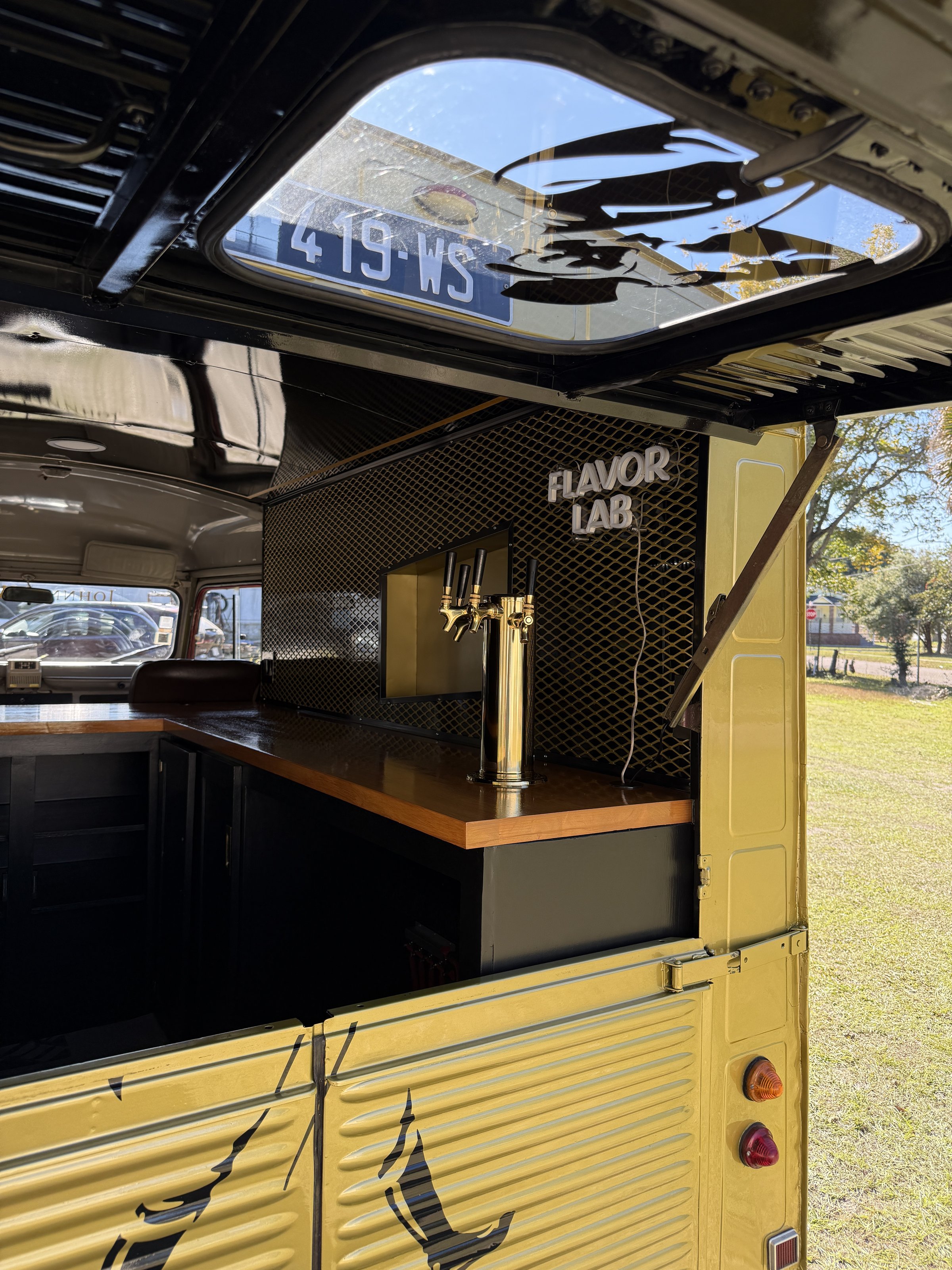
Painted gold and black, the Scotch brand's three Citroën H vans open along one side onto a wood-topped bar with a four-tap draft tower, built to be photographed and to pour samples.
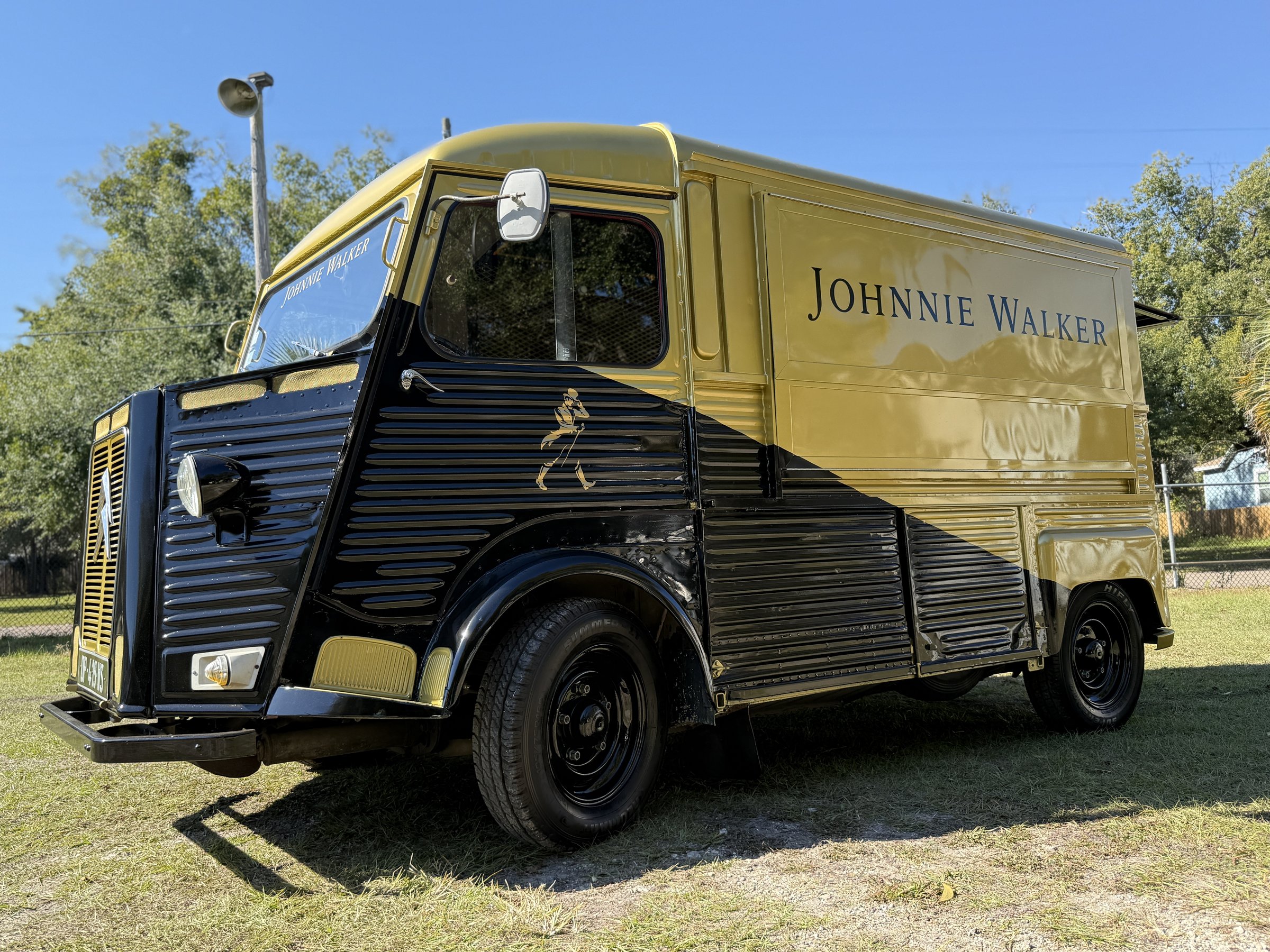
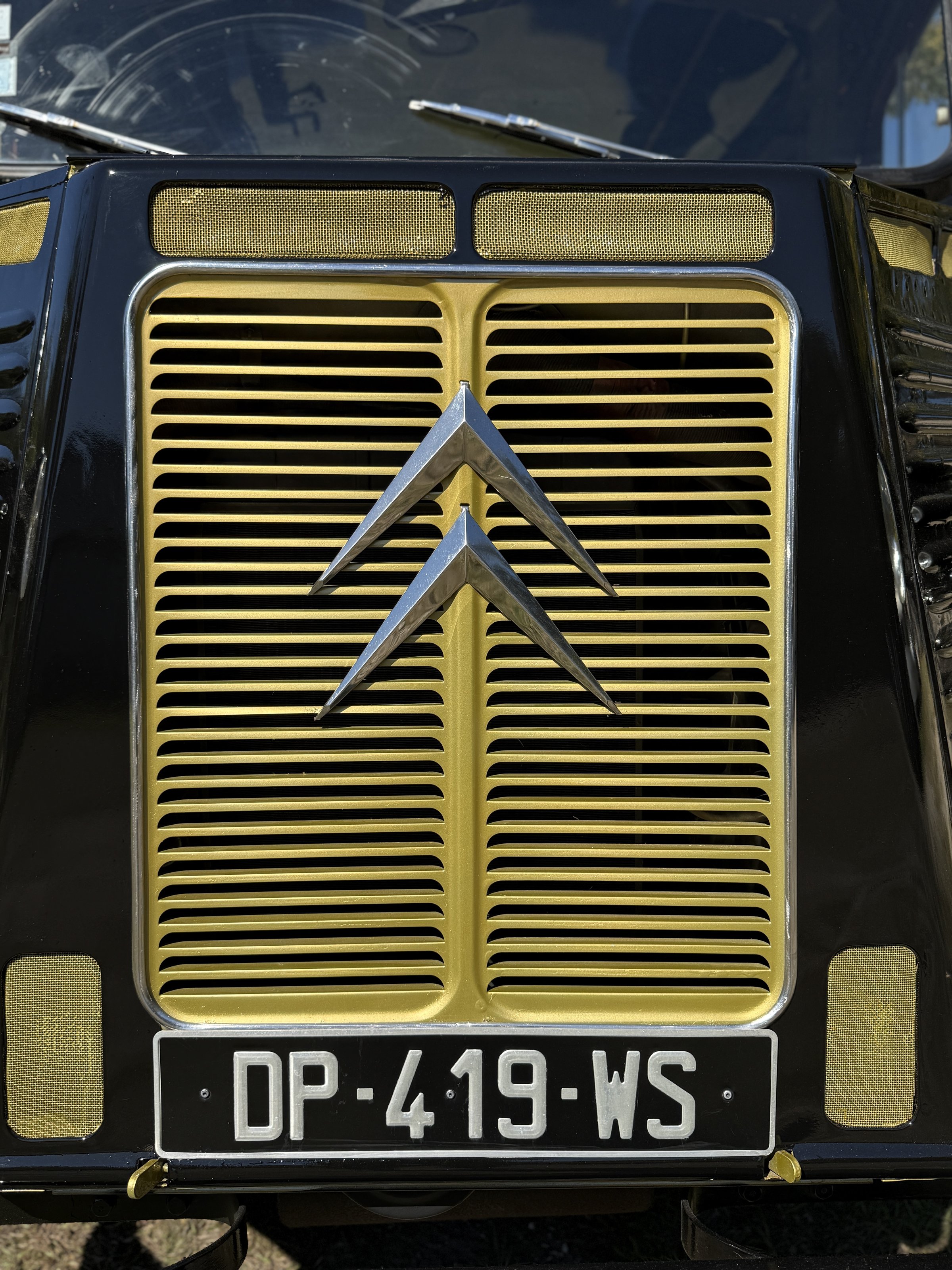
Parked on grass with its hatches shut, the van could pass for a restored classic. The corrugated body of a vintage Citroën H van is painted gold over gloss black, the two colors split by a single diagonal that runs from the front wheel up toward the rear. Johnnie Walker is lettered in black capitals along the gold side panel and again across the top of the windshield, and a small gold striding figure sits on the black cab door. The grille is painted gold too, with the Citroën chevrons left in chrome.
Johnnie Walker has three of them, converted into branded vehicles for its experiential program. The Hudson Trailer Company, which built them, describes the set as "head-turning, photograph-first builds" meant to anchor that program. Each one is a working bar as well: lift the hatch and the van becomes a counter for pouring samples.
What the vans do for Johnnie Walker
A brand tent at a festival looks like every other brand tent. A gold Citroën doesn't. The H van's shape, with its ribbed panels, rounded roof and short nose, is recognizable from across a lawn, and the paint turns it into a piece of Johnnie Walker packaging on wheels. Guests can walk up to the side, stand at the counter and be served, and a photograph taken there has the brand's name in the frame without anyone having to place a logo.
The vans also give the brand something a rented bar can't: a set that can be driven in, opened, closed and driven away, and that looks the same wherever it parks. With three of them, the brand isn't limited to one place at a time.
A long hatch on the service side
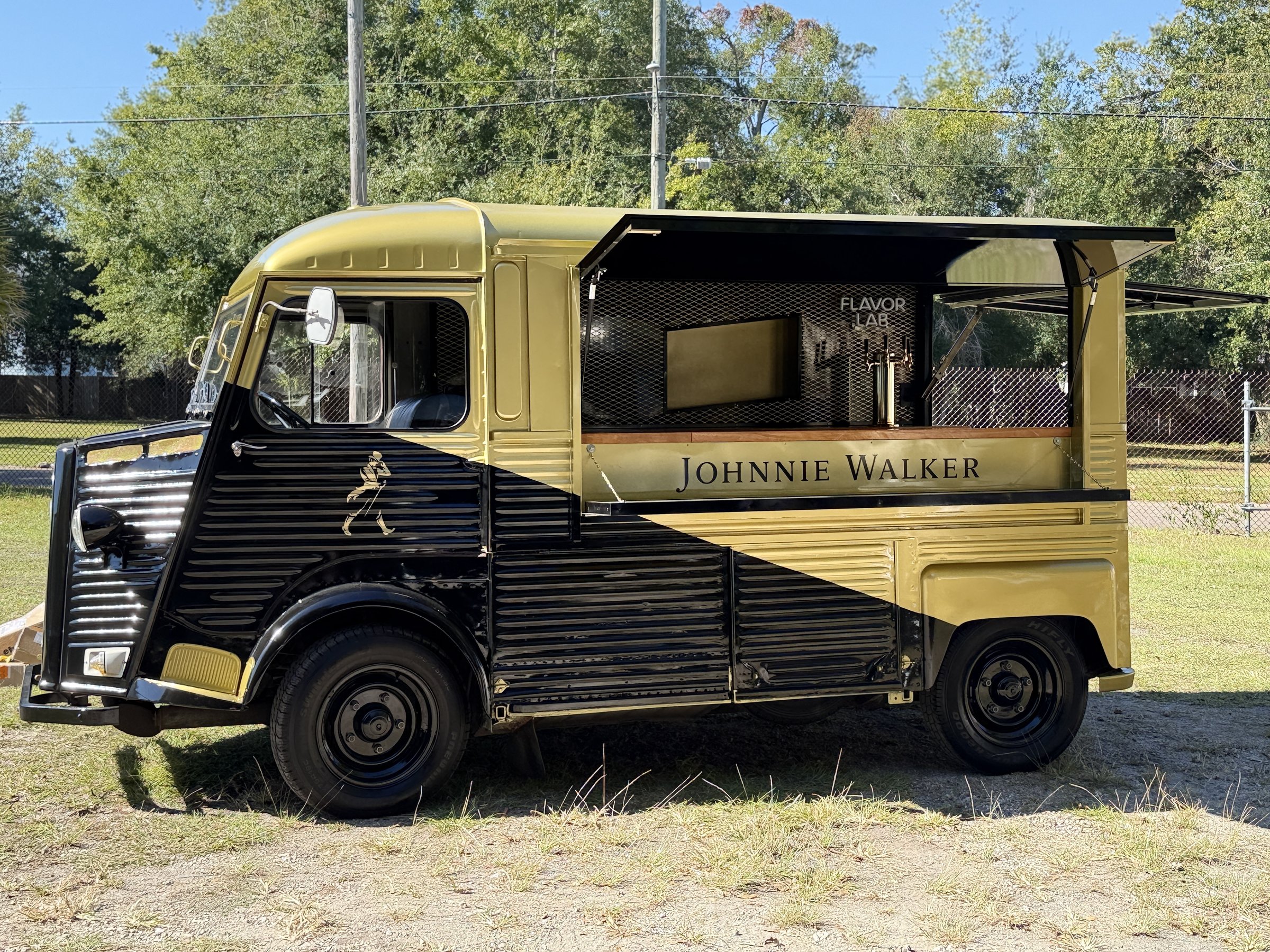
The service side of each van is the one lettered Johnnie Walker. A long panel along the upper body lifts on struts to make a canopy, and a second flap at the rear corner opens the end of the counter as well. Below the opening, a panel forms the front of the counter and repeats the brand's name in black.
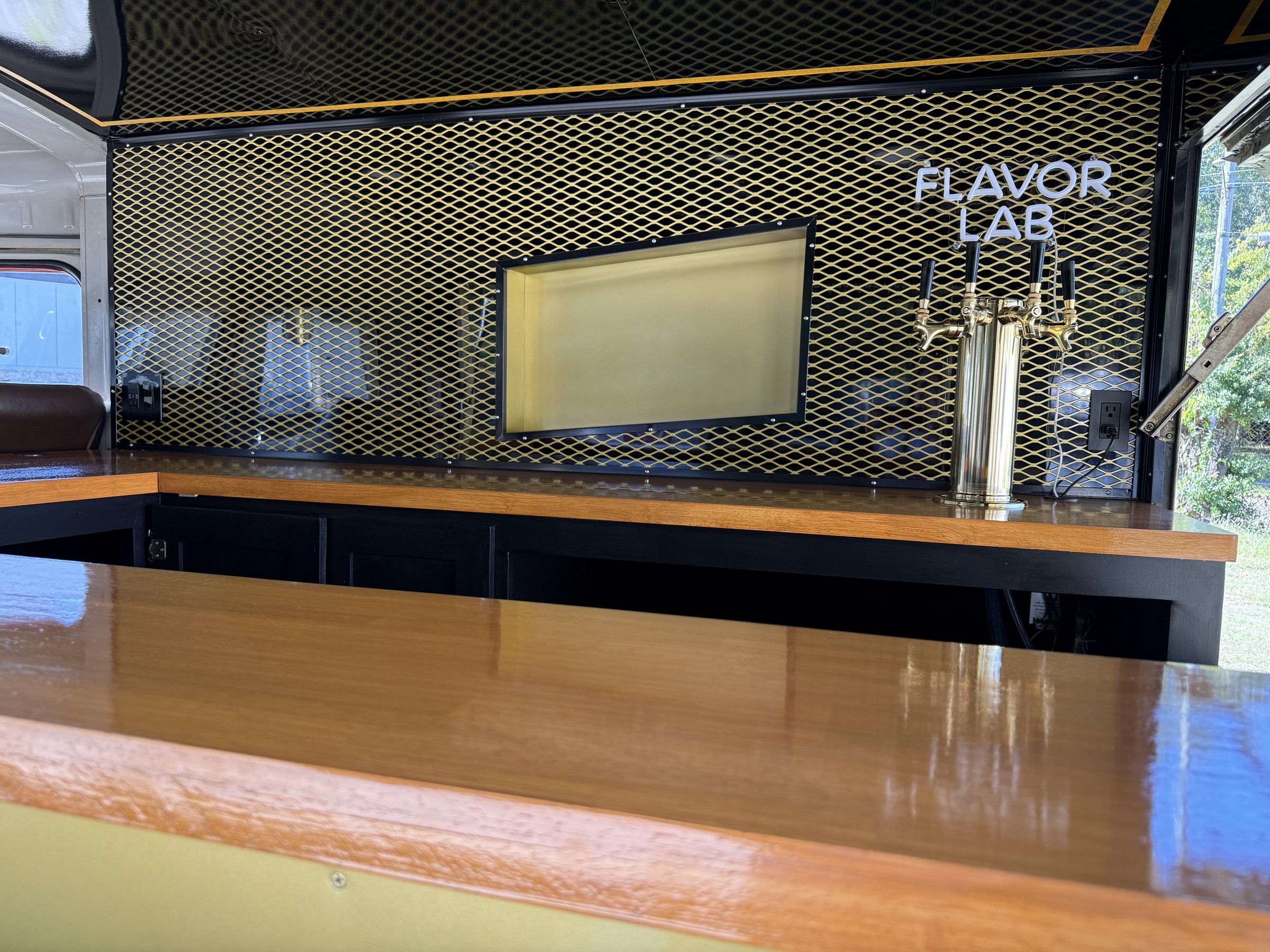
Inside, the bar is laid out like a small cocktail lounge. Varnished wood counters sit on black cabinetry. The back wall is a sheet of gold expanded metal in a black frame, with a recessed lit niche set into it and a sign that reads Flavor Lab. A four-tap draft tower stands on the counter. When the back is opened too, guests behind the van can see through to the tap tower and the sign.
Fitting a bar into a six-foot box
The space is small. The first van is about 171 inches long, a little over 14 feet, and project records put the inside of its box at about 72 inches wide, 72 inches high at the center and 96 inches from the back of the seats to the rear doors.
The layout makes the most of it. The counter on the passenger side is 24 inches deep, with the wall above it bumped out a few inches so that 2.5-gallon Cornelius kegs still fit underneath, and there's room beside them for the CO2 or nitrogen regulator that pushes the product. That leaves an aisle of about 35 inches for staff to work in.
Power comes from a 30-amp shore connection, and the van's electrical panel sits in a cabinet that staff reach from outside, through a sliding door in the body. Some of the choices are about the people working inside. The back wall uses flattened expanded aluminum rather than the standard kind, whose cut edges can be sharp. Recessed lights are set into the ceiling, and a strip of color-changing LED lighting runs around its edge.
Painted, not wrapped
The vans are painted in the brand's colors and then lettered in vinyl, with gold on the box and roof and black on the nose and lower body. Paint has an advantage a wrap doesn't: it reaches the door jambs, which are technically inside the vehicle but in plain view whenever a door is open. The first van arrived with a roof rack; the finished van has a clean roofline.
Three vans that match, nearly
Vintage H vans aren't built to order, and finding three alike took work. The first was an original with three rear doors, a rarer configuration. The two that followed have double rear doors.
The first van was finished in late 2025. The other two went through paint, which takes longer on a vintage van, and then vinyl, and were ready in spring 2026. There is no published record yet of where the three have appeared since.
What other brands can take from it
Plan for a family resemblance, not clones. Old vans come in variations, and a second or third one found after the first will differ in small ways, here the number of rear doors.
Paint where people can see in. A painted vintage van can be finished in the places a wrap would miss, like the door jambs.
Draw the service before the cabinets. The keg space, the regulator, the aisle width and the electrical panel all compete for room in a box six feet wide, and every inch given to one of them comes out of another.
Sources
- Experiential Activations & Brand Pop-ups ('For Johnnie Walker, we converted three vintage Citroëns into striking brand vehicles'), The Hudson Trailer Company (builder)
- Brand Activations & Experiential Vehicles (lists Johnnie Walker among its activation clients), The Hudson Trailer Company (builder)
- Build photographs and project correspondence for the Johnnie Walker Citroën vans, October 2025 to April 2026, The Hudson Trailer Company (builder)