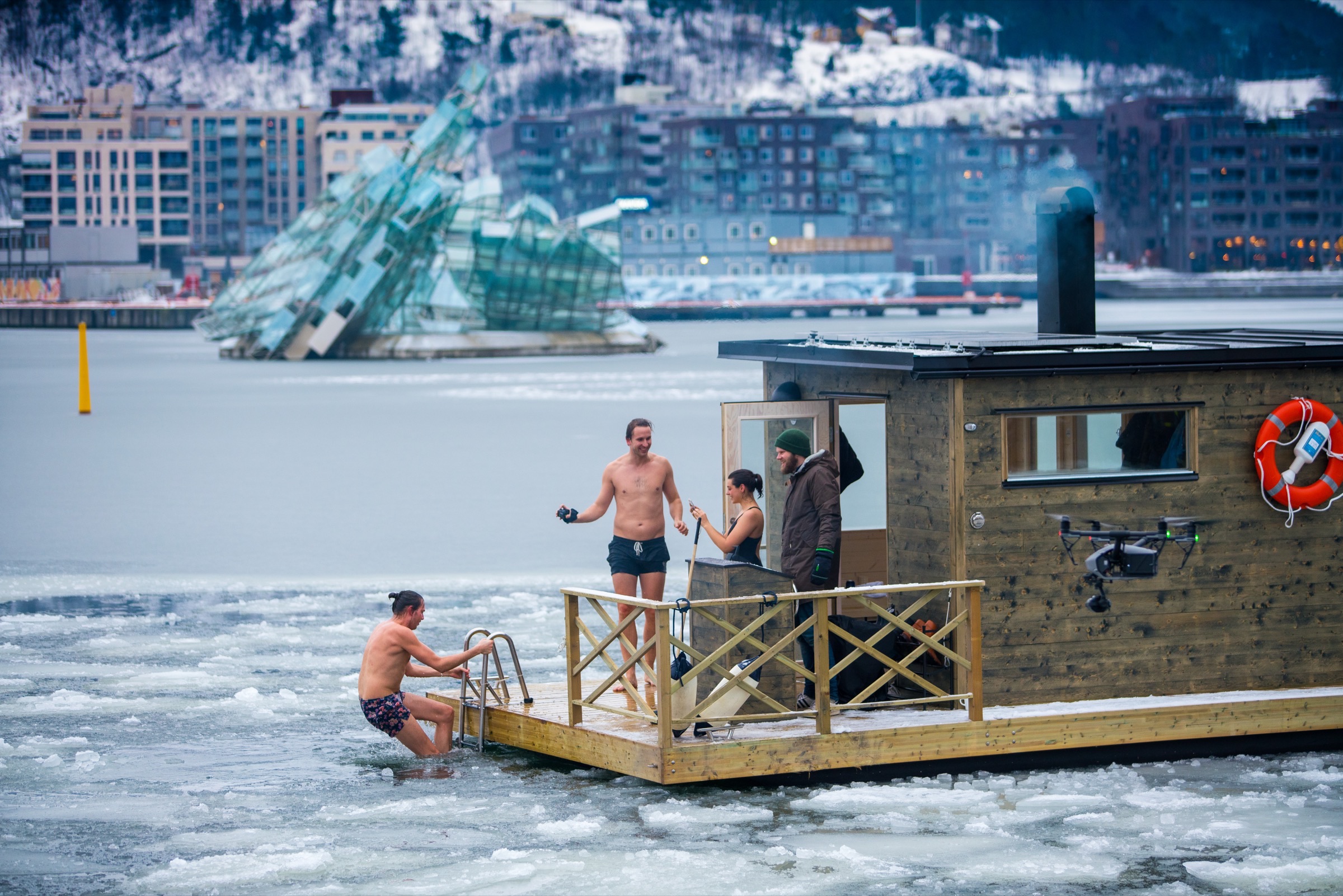
Mobile wellness covers services that usually need a room, such as a sauna, a salon chair or a tattoo station, built into a trailer, bus or boat and taken to the customer. Because the customer sits inside it, the vehicle is the treatment room, and the rules that govern that room shape the business.
Mobile saunas
Four sauna operators show the range: floating saunas in Oslo, a converted horsebox on Brighton Beach, 20-foot barrel saunas towed to Seattle beaches, and a tornado-damaged tool-shed trailer rebuilt in Toronto. The wheels or hull let an operator use valuable waterfront under temporary permits without owning or leasing it; one Seattle operator says availability largely depends on park permits. A sauna seats between two and sixteen people, so each operator sells seats by the session or the month, priced more like a fitness studio than a spa.
Mobile salons
Primp parks a full-service salon trailer at the amenity centers of planned neighborhoods in St. Johns County, Florida, a different one each day on a schedule posted two months ahead. The service list is not cut down for the trailer. The company is now franchising, which makes the route the product as much as the vehicle.
Mobile tattoo studios
In the Pacific Northwest, tattoo artists work from converted buses. A tattoo table under a tent is not an enclosed environment; a licensed bus parked beside it is. One Portland operator says the bus found a market for impulse tattoos, many of them first tattoos.
What carries over
In each case the vehicle lowered the cost of starting, and the business leans on a predictable schedule or repeat customers: memberships, a posted route, a calendar of events.