Two Piaggio Apes and the 100-person coffee rush at Wildflower Studios
At Robert De Niro's vertical film studio in Queens, coffee comes to the crew on two three-wheeled Italian trucks built for the moment a whole soundstage breaks at once.
The worst moment for coffee on a film set is the moment a director calls a break. The company that built the two small coffee vehicles now working at Wildflower Studios in Queens describes it plainly: when a director calls a wrap or a meal break, it says, "100+ crew members can exit a soundstage simultaneously."
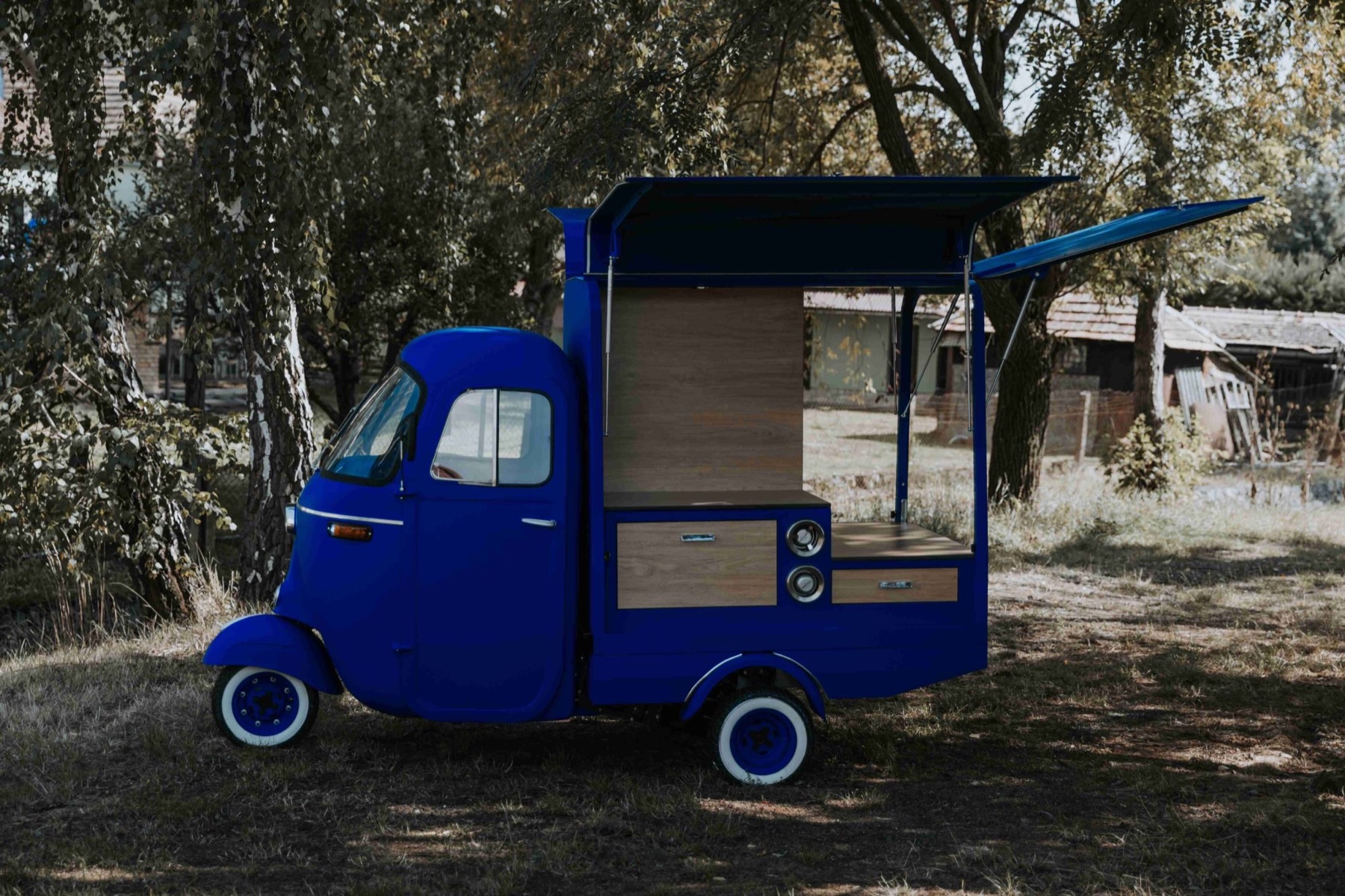
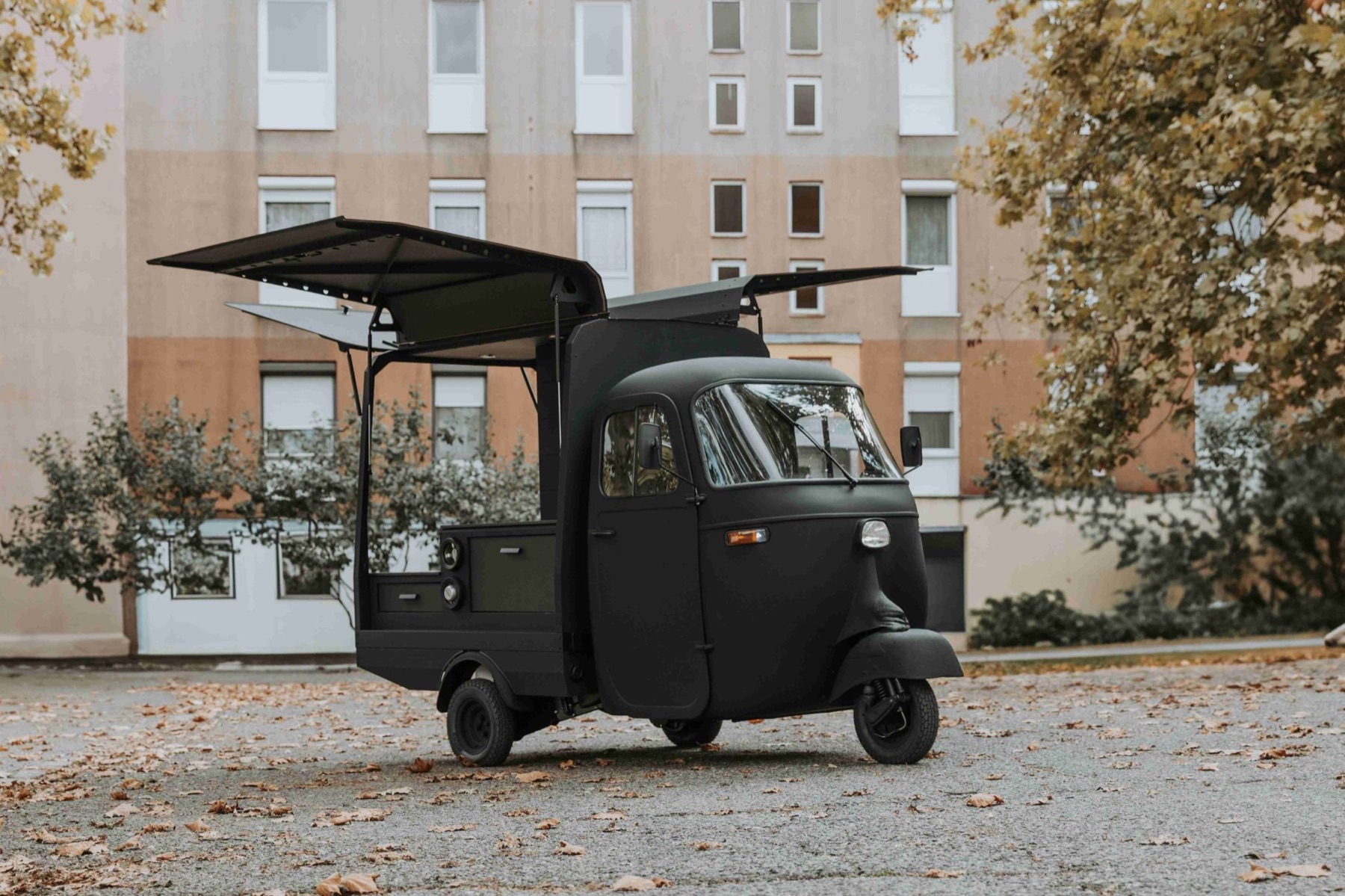
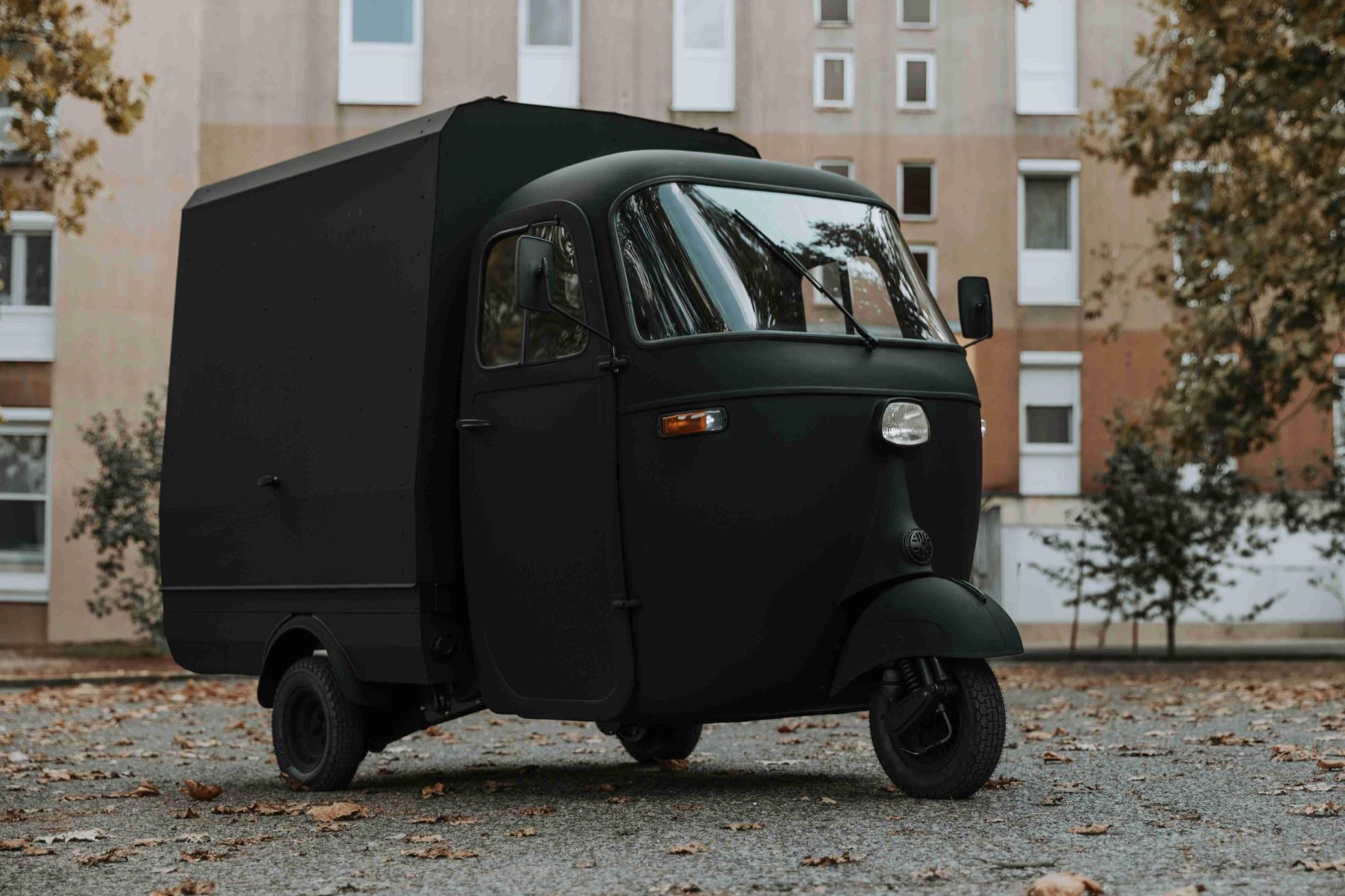
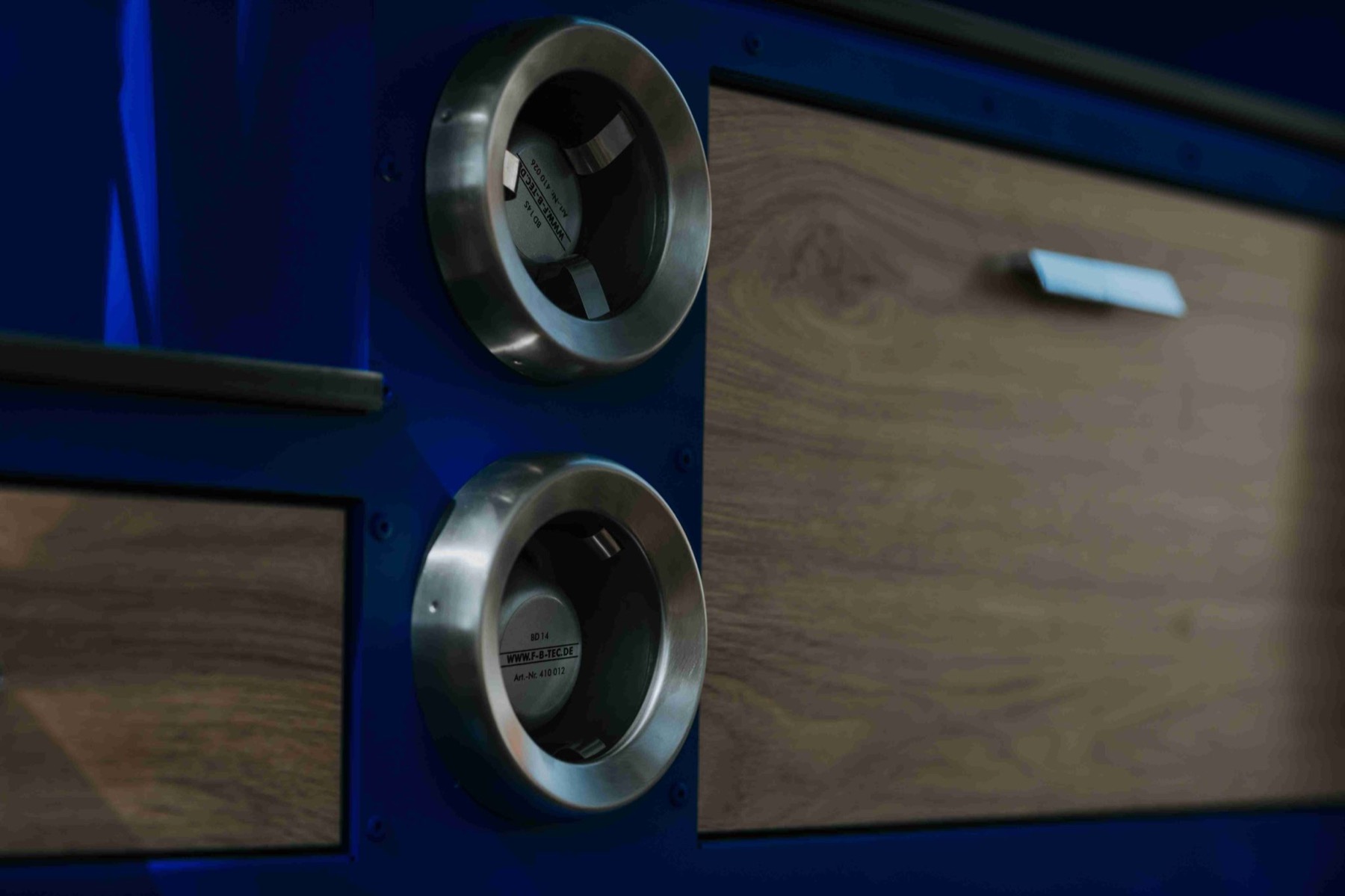
Wildflower's answer is a pair of Piaggio Apes, the three-wheeled Italian trucks more often seen hauling crates through narrow streets in Italy. One is black, a shade its builder calls Vanta black. The other is a bright blue on whitewall tires. For service, the builder says, gullwing pop-up roofs give overhead coverage. Paper cups come out of dispensers set flush into the exterior. The point is to serve a lot of people very quickly and then drive somewhere else.
A studio built like a building, not a backlot
The setting explains the vehicle. Wildflower Studios sits at 35-15 19th Avenue, on the waterfront at the northwest tip of Astoria, Queens. Robert De Niro, his son Raphael De Niro and the developer Adam I Gordon developed it, and Bjarke Ingels Group designed it. The studio lists 11 combinable soundstages in 760,000 square feet, with stages that average about 18,000 square feet and 45 feet to the lighting grid.
What makes it unusual is that the stages are stacked. Traditional studios spread soundstages across acres of flat lot. BIG put them on top of one another in what the firm calls a vertical "studio village," and says this is a first for the building type. The building is raised above flood zones, and trucks drive in underneath it. The New York Post reported in May 2025 that its first production was season two of CBS's Elsbeth.
Gordon has been open about the ambition. "It's a million details that have been thought about in a very forensic way," he told Deadline in June 2025, after listing hair and makeup rooms kept at the right temperature and outlets placed where they are needed. Food is part of that pitch. The studio's website describes a commissary with menus by acclaimed chefs. Deadline described a 224-seat dining room and a 5,000-square-foot commercial kitchen. The same story said, in a single sentence, that "a roving pair of electric three-wheel Piaggio coffee carts" would supply the caffeine.
Why a commissary is not enough
A kitchen and dining room are fixed. Crews are not, and their breaks are not spread evenly through the day. A shooting crew works to the schedule of the scene. When lunch or a wrap is called, a whole stage empties at once. The builder puts that at more than 100 people. A single coffee counter at the end of a long corridor then becomes a line, and on a production, time in line is time that someone is paying for.
The builder says the studio wanted a nimble, high-throughput coffee setup that could serve the rush without creating a bottleneck. Deadline's description of the pair as roving fills in the rest: the coffee should go to where the crowd is going to be, and should have enough capacity to serve a surge rather than an average.
A cart parked outside a stage door shortens the walk. Two carts can split a crowd, or be sent to two stages breaking at different times. Vehicles also leave when they are done, which a counter cannot do in a building where a hallway or a loading area may be needed for equipment an hour later.
Why an Ape
The Piaggio Ape has been doing small-business work since 1948. Piaggio's own history says Enrico Piaggio and the engineer Corradino D'Ascanio, who designed the Vespa, created it by borrowing, figuratively, a rib from the Vespa, and that the first version used a 125cc engine shared with the scooter. Ape is Italian for bee. In a 2018 history, Piaggio put sales at about 6 million worldwide.
What made the Ape useful in postwar Italy makes it useful on a studio lot. Piaggio's history describes it as agile in even the busiest city traffic. On a lot, that means it can go where a full food truck cannot and park near a stage door without blocking a loading dock. It also looks good. On a campus that sells itself on design to productions, a coffee cart that photographs well is not a minor point.
What is packed into a tiny truck
The engineering problem with any small coffee vehicle is power and water. Espresso machines draw a lot of electricity, and a café needs plumbing. The builder's project page lists hardwired 110-volt power with built-in outlets and USB charging, plus 240 volts for the coffee equipment. It calls each Ape self-contained and pre-plumbed for espresso service.
The rest of the build is about the rush. The builder says it designed the gullwing roofs to speed service during the rushes; they give cover without a separate awning to set up. The cup dispensers are mounted flush in the exterior casework. It put 110-volt and USB outlets right on the service counter so a point-of-sale system can be plugged in where the transaction happens, rather than on a cable running inside. The cabinetry is marine-grade wood, chosen, the builder says, to stand up to daily, high-volume use.
That durability has already been tested. The builder says the studio "accidentally crashed the two units into each other on the lot," and that its team repaired them and returned the pair to service. Wildflower has not commented on the incident. If accurate, it shows that the Apes are working vehicles, driven around the lot every day, not props parked by the entrance.
What other operators can take from it
The Wildflower carts solve a narrow problem: a predictable surge at an unpredictable time, in a place where the customers cannot leave to find coffee elsewhere. That pattern turns up far beyond film. Hospital shift changes, stadium concourses at halftime, conference sessions letting out, and factory breaks all look like it.
The general lessons are clear enough:
- Design for the peak, not the average. Two units sized for a stage-sized crowd are a different answer from one counter sized for a day's total.
- Bring the service to the door. Moving one cart is easier than moving a stage's worth of people.
- Spend the space on speed. Flush dispensers, a counter-mounted POS and a roof that opens up with the service window are small details that cut seconds from each order.
- Make it look like it belongs. On a design-led campus, the coffee truck is part of the pitch to the productions that rent the stages.
Several things are still unknown. Neither the builder nor Wildflower has said who staffs the carts, what coffee they serve, whether crews pay, or how many cups each Ape can produce in an hour. The builder's page does not give a delivery date or say whether the trucks are electric or gas; Deadline called them electric.
Sources
- The builder's project page
- Wildflower Studios, Wildflower Studios
- Press, Wildflower Studios
- Wildflower Film Studios Astoria, Bjarke Ingels Group
- Robert De Niro's Sleek, New Seven-Story Wildflower Studios Gears Up In Astoria (Jill Goldsmith, June 6, 2025), Deadline, syndicated on Yahoo
- Inside the Robert De Niro-backed, state-of-the-art 'vertical film studio' (Will Zimmerman, May 6, 2025), New York Post, reposted by Wildflower LTD
- Ape (1948-2019): an Italian story, Piaggio Group press office