The moving flagship: build it, rent it, or wrap it
Brands are putting flagship-grade retail inside trucks and vans. An Adidas seeding truck, a NARS glass showroom and a South Florida van-rental platform show three ways to pay for it.
A flagship store is a brand's argument made in architecture: the best materials, the full range, staff who know the product. For most of retail history that argument has been fixed to an address. Some brands now make the same argument from the back of a truck, and they are buying it in three very different ways.
The vehicles look alike from the curb: a box on wheels with a logo. What differs is who owns the box, what is inside it, and how many times it is meant to be used. Two recent projects and one platform still looking for its first public client show what each kind of spending buys.
The bespoke build: Adidas and the seeding truck
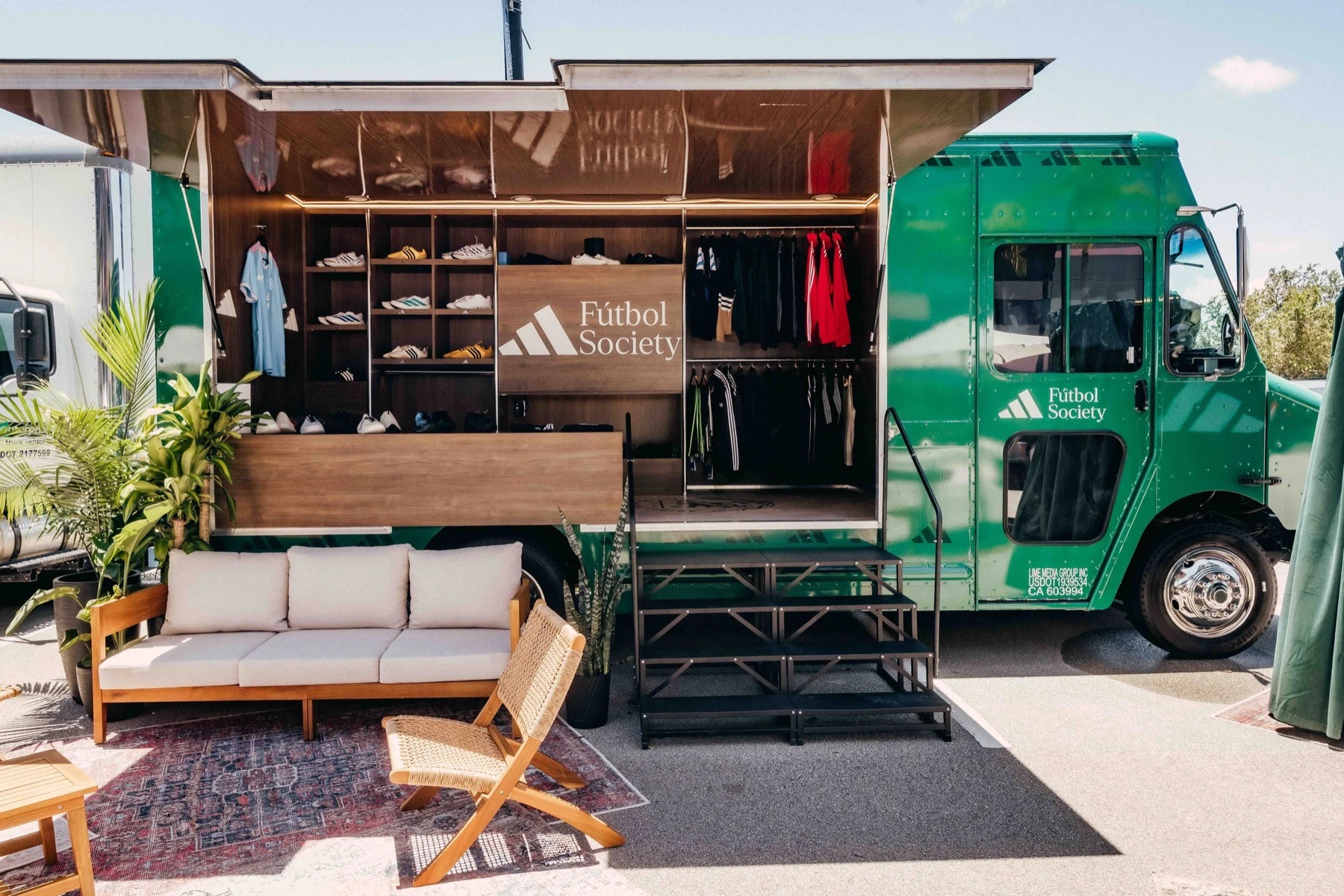
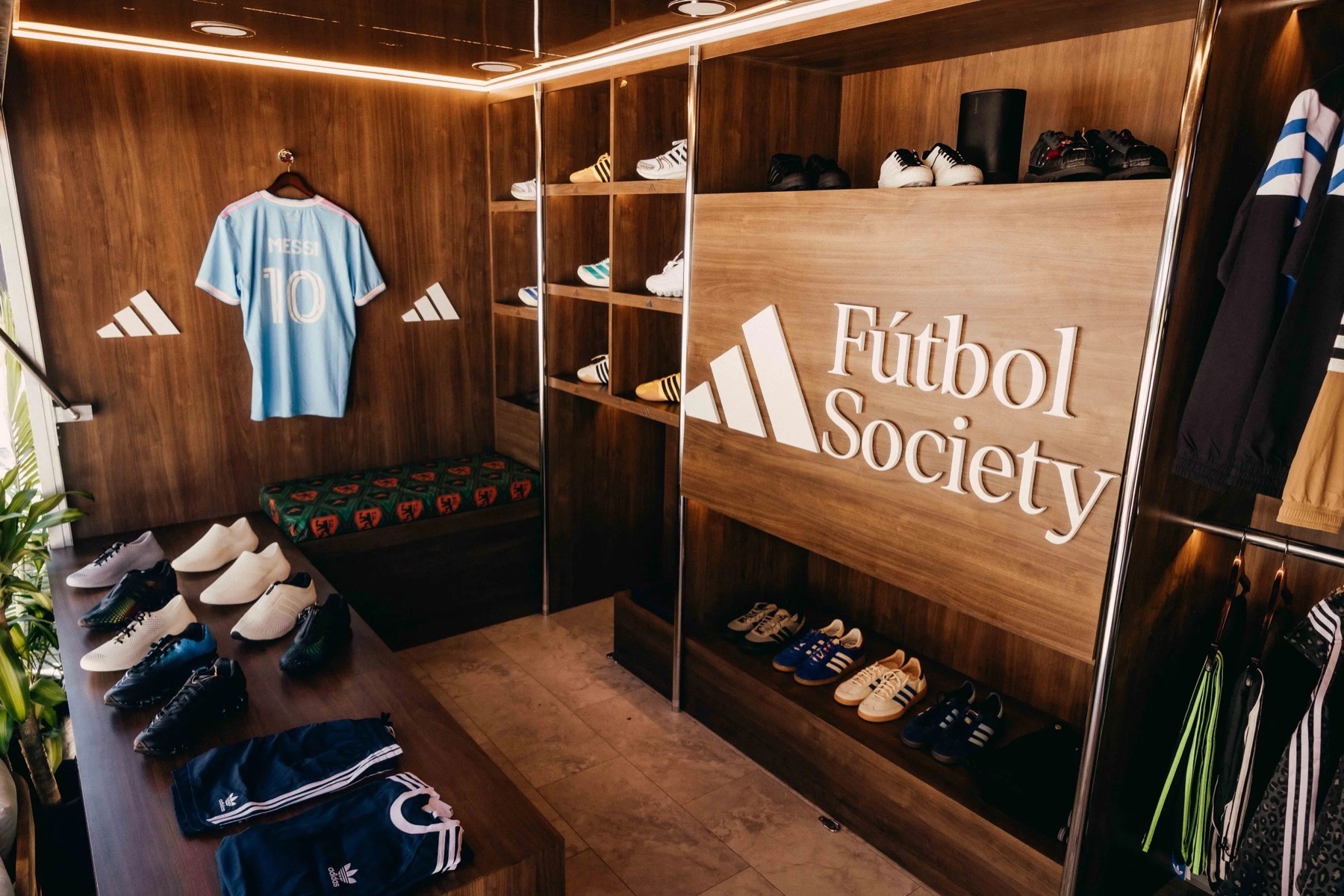
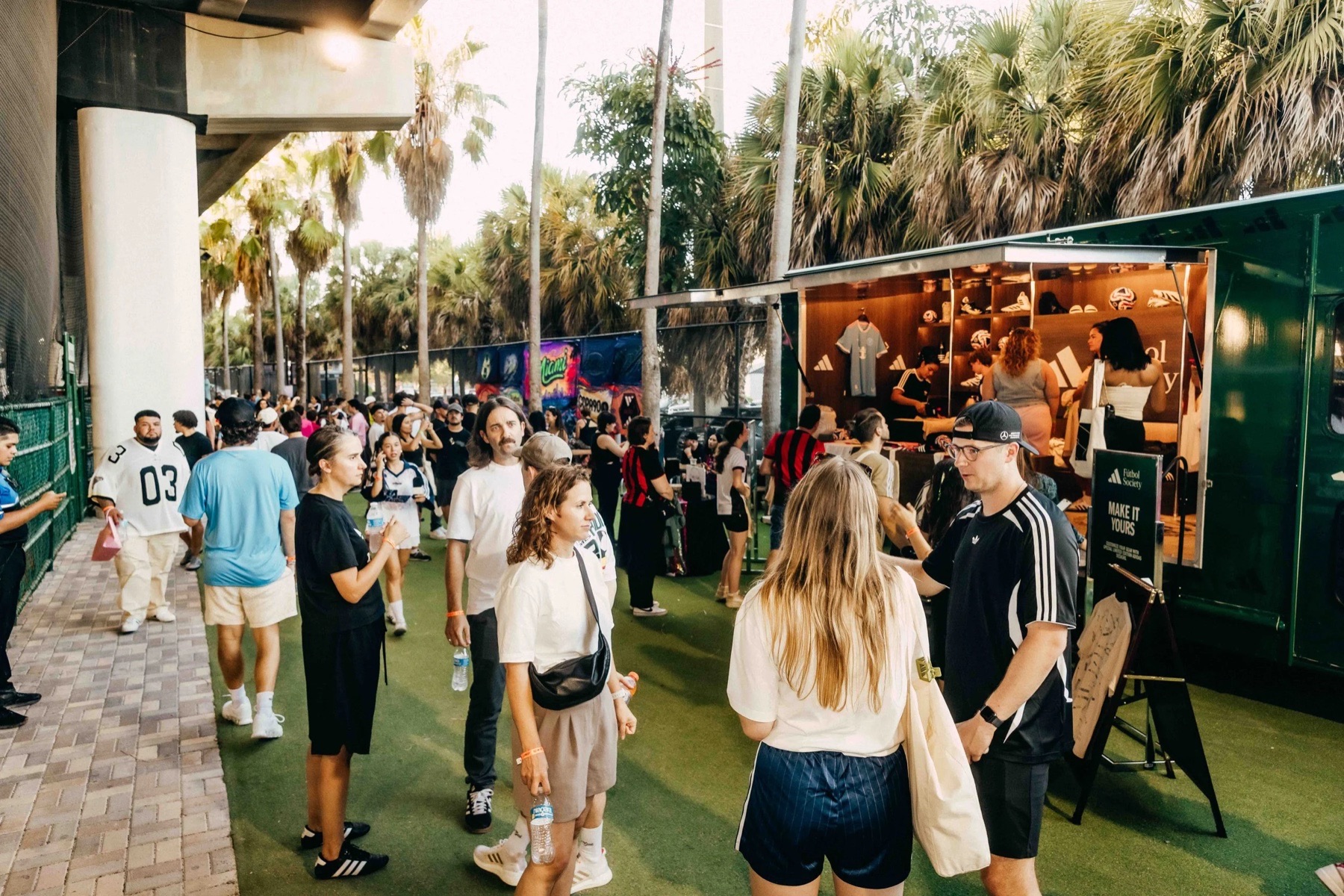
To celebrate the FIFA Club World Cup, Adidas sent a truck around Florida that was closer to a boutique than a promotional vehicle. A production company designed and fabricated it for Adidas's agency, according to the builder's own case study.
The interior borrowed the vocabulary of luxury retail rather than sportswear marketing: wood paneling, chrome fixture accents, integrated LED lighting trained on the product displays, and custom shelving with built-in alcoves for club kits, footwear and accessories. The body opened outward to reveal what the builder describes as an elevated, shop-like space. Outside, the agency built a hangout zone with an Adidas-logo domino table, ping pong wrapped in "Nacido de la Grieta" graphics, and oversized cornhole and Jenga.
The truck was not a shop in the transactional sense. It was a seeding vehicle: it debuted at an Adidas Fútbol Society event in Miami, then stopped in Fort Lauderdale and Orlando to put product in the hands of athletes, partners and community influencers. The giveaway was the point, and the setting made the gift feel like a purchase from a flagship.
The least glamorous line in the builder's scope of work may be the most telling. Alongside the chrome and woodwork, the agency ran a pop-up warehouse plus receiving, inventory, local fulfillment and replenishment. A moving flagship still needs a stockroom. Here it sat off the truck, in a temporary facility.
What the bespoke build buys is total control: every finish, fixture and sightline belongs to the brand. What it costs, besides money that neither party discloses, is reuse. A truck paneled for one campaign's story is hard to repurpose for the next.
The specialist rental: NARS and the glass truck
NARS had a different problem. It introduced Natural Matte Longwear Foundation in April 2026 in 49 shades, and the job, as its agency frames it, was precise: put the right shade on the right face, then send that customer into a store to buy it. Shade matching depends on light, and Texas heat is hard on makeup.
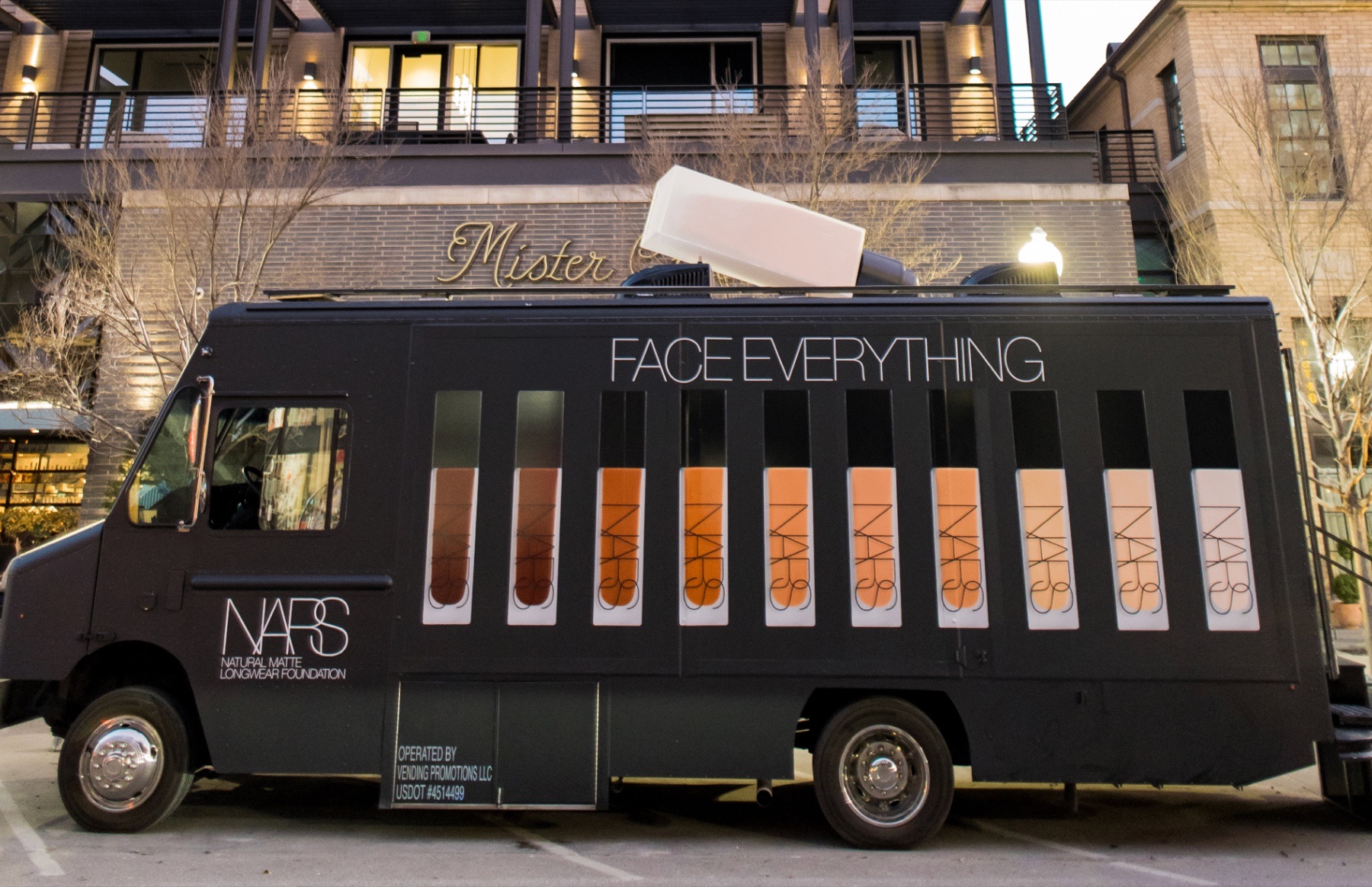
The answer, as the agency behind the tour describes it in its own case study, was a glass-walled box truck parked at Sephora and Ulta locations in Dallas and Houston. The agency says the glass let passersby see the activation, while the interior stayed private enough for a one-to-one consultation. The agency says HVAC held a "makeup-safe 70°F" interior while temperatures outside topped 100°F. It also says the LED arrays carried a 95+ CRI rating, a measure of how faithfully light renders color, which the agency credits for shade-matching accuracy. It claims thousands of one-to-one sessions. That figure is the agency's own, and we found no NARS, Sephora, Ulta or press account of the tour to check it against.
The structural detail sits in the credits. The truck is credited to a separate vehicle provider and listed among the partner-owned assets in the agency's network, next to glass coaches and a glass double-decker bus. Creative and production were handled by two more firms. The campaign did not build a truck from scratch. It used a specialist vehicle from someone else's fleet, and the case study's emphasis is on the fit-out: lighting and climate that made the product perform.
This middle model buys expertise without ownership. The glass truck stays in its owner's fleet after the tour, so the brand's money can go to the parts that sell its own product, such as color-accurate light and a cool room, rather than on steel and glazing. The trade-off is that the vehicle's silhouette is not exclusive, so differentiation has to come from what happens inside.
The wrap-and-go platform
At the far end from bespoke is a South Florida van-rental platform that presents itself as a mobile brand activation service. Its homepage lays out a four-step process: the brand provides artwork, the platform wraps and prepares the van, the brand activates with its own team, and the brand captures leads. "Not a tent or booth — a full brand environment," the site says.
The platform pitches the van to beauty, hair, fashion, fitness and tech brands and to agencies, and its concept tiles and About page add luxury. Its events page pitches the van against a South Florida calendar: Art Basel, Miami Swim Week, Formula 1 Miami, plus salons, gyms, hotel driveways and neighborhood tours from Brickell to Wynwood. The About page goes further, saying the company designs, builds and operates custom vehicles, pop-up units and portable showrooms, for anything from a day to a full tour, along with data capture and post-event reporting.
The model deserves attention, but so does how little the company publishes. As of October 2026 the site names no founder, no staff and no clients; the About page cites the team's experience with brands up to established global names but identifies none. The six sector tiles on its homepage are labeled "Concept activation," which means renderings, not past work. Its inquiry form asks for a budget from "Under $5,000" to "$50,000+." Those are bands on a form, not prices.
What a platform like this sells is speed and a low floor. A brand that could never justify fabricating a truck can rent a premium-looking box for a weekend and make it look like its own. The cost is the reverse of the Adidas case: the brand controls the surface but not the architecture. When the shell is shared, the wrap and the staff carry the whole brand story.
What each model buys
Set side by side, the three examples divide a brand's money in different ways.
- Bespoke pays for authorship. The vehicle itself carries the brand, which suits seeding and press moments where the setting is the message. It also brings a back end, such as the warehouse and replenishment, that the brand has to fund.
- Specialist rental pays for performance. The money goes to the conditions the product needs, such as light, temperature and privacy, on a chassis someone else amortizes.
- Platform pays for access. It offers the lowest commitment and the fastest turnaround, with the brand's identity carried mostly by graphics and people.
All three pitch the vehicle as a destination rather than a billboard: somewhere people step inside, try on, get matched, take something home. That is the meaningful shift, and it is why the flagship comparison fits. These are no longer trucks advertising a store somewhere else. For the length of a stop, the truck is the store.
Picking a model comes down to which of three things matters most: whether the vehicle has to be the story, whether the product needs special conditions to sell, or whether the brand simply needs to be in more places. A fitted-out rental can do the second job better than a bespoke build, and a wrapped van can do the third with far less commitment. Only the custom truck does the first, and only once.